
Arizona Employment Law Update: Spring 2026
By Anjali Patel
Arizona Employment Law
Arizona employment law updates in spring 2026 matter because small shifts in statutes, regulations, and enforcement priorities can materially affect employees’ rights and employers’ exposure, even when no single change makes headlines. For Arizona workers, this is often when they realize something about their pay, leave, or termination did not sit right. For employers, this is often when routine practices quietly fall out of compliance.
Many employment disputes arise not from intentional misconduct, but from outdated policies, incorrect assumptions, or shortcuts that no longer align with current Arizona and federal law.
Why employment issues spike in the spring
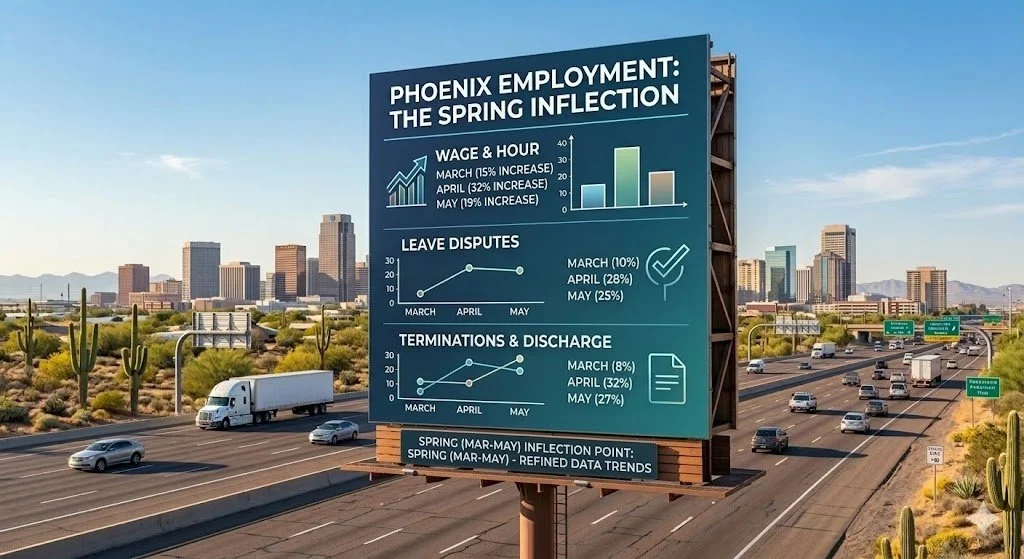
Spring is a common inflection point in employment disputes. Employers implement new budgets, adjust staffing, and revisit schedules. Employees reassess jobs after year-end changes, bonuses, or benefit resets.
This timing leads to an increase in:
wage and hour complaints
disputes over paid leave and accommodations
terminations that trigger retaliation or wrongful discharge claims
What looks like routine workplace management on one side often looks very different to the person affected.
Wage and hour issues continue to drive claims
Wage disputes remain one of the most common sources of employee-side employment claims in Arizona.
Minimum wage rates, overtime calculations, and classification issues continue to trip up employers, particularly smaller businesses that rely on informal pay practices. Arizona’s minimum wage is adjusted annually, and failure to update payroll systems correctly can lead to underpayment without anyone noticing right away. See A.R.S. § 23-363.
Misclassification of employees as exempt or as independent contractors is another frequent issue. Employers often rely on job titles or past practices rather than current legal standards. Employees, meanwhile, may not realize they are entitled to overtime or other protections until the issue persists.
Leave, accommodations, and retaliation concerns
Requests for medical leave, disability accommodations, pregnancy-related accommodations, and protected time off continue to be a major source of conflict.
Employees are often disciplined or terminated shortly after making a request, even when the employer believes the decision is unrelated. Timing matters in these cases. From a legal standpoint, close timing between a protected request and an adverse action raises questions that employers cannot ignore.
Arizona employees are protected under a combination of state and federal laws, including the Arizona Civil Rights Act. See A.R.S. §§ 41-1461 through 41-1484. These laws prohibit retaliation for asserting protected rights, even when the underlying request is inconvenient or unpopular.
Termination decisions that create legal risk
Many wrongful termination claims arise from situations where employers believe they are acting within their rights, but documentation or consistency is lacking.
Arizona is an at-will employment state, but that does not mean employers can terminate employees for any reason without consequence. Terminations that follow complaints, leave requests, or protected activity are closely scrutinized.
From the employee side, this is often the point where someone asks whether what happened was legal. From the employer side, this is often when they realize they do not have clear records supporting the decision.
A common question: Do these laws apply to small employers?
Do Arizona employment laws apply to small businesses?
Often, yes. While some federal laws apply only above certain employee thresholds, Arizona law provides protections that apply regardless of employer size. Employers who assume they are exempt because they are small may be relying on incorrect information.
Employees working for small employers should not assume they have no protections. The analysis depends on the specific claim and statute involved.
Why “we’ve always done it this way” no longer works
One of the most common themes in employment disputes is reliance on outdated practices. Policies that were acceptable years ago may now conflict with updated regulations or enforcement priorities.
Spring 2026 is a good reminder that employment law is not static. Employers who do not periodically review policies risk exposure. Employees who experience sudden changes in treatment or pay should not assume the issue is unavoidable or lawful.
What employees should pay attention to right now
Employees should be alert to:
unexplained pay changes
denial of legally protected leave
discipline following complaints or requests
pressure to waive rights without time to review
These situations do not automatically mean a violation occurred, but they are common starting points for valid claims.
Why early legal advice matters on both sides
Employment disputes escalate quickly. Employees often wait too long, assuming issues will resolve themselves. Employers often wait until a demand letter arrives.
Early legal review can clarify whether a claim exists, what risks are present, and whether resolution is possible before positions harden.
Arizona employment law in 2026 continues to evolve through statutory changes and case law. Staying informed reduces surprises and costly mistakes.
Employment disputes escalate quickly. Employees often wait too long, assuming issues will resolve themselves, while employers wait until a demand letter arrives. Early legal review can clarify whether a claim exists, what risks are present, and whether resolution is possible before positions harden.
If you want more background on recent developments, you may find our discussion of year-end Arizona employment law updates affecting employees and employers helpful. Employees preparing for performance reviews or employment transitions may also want to read about how Arizona year-end reviews can impact employee rights.
If you need help with your situation in Arizona, you can contact us directly here: https://www.allenlawaz.com/contact.